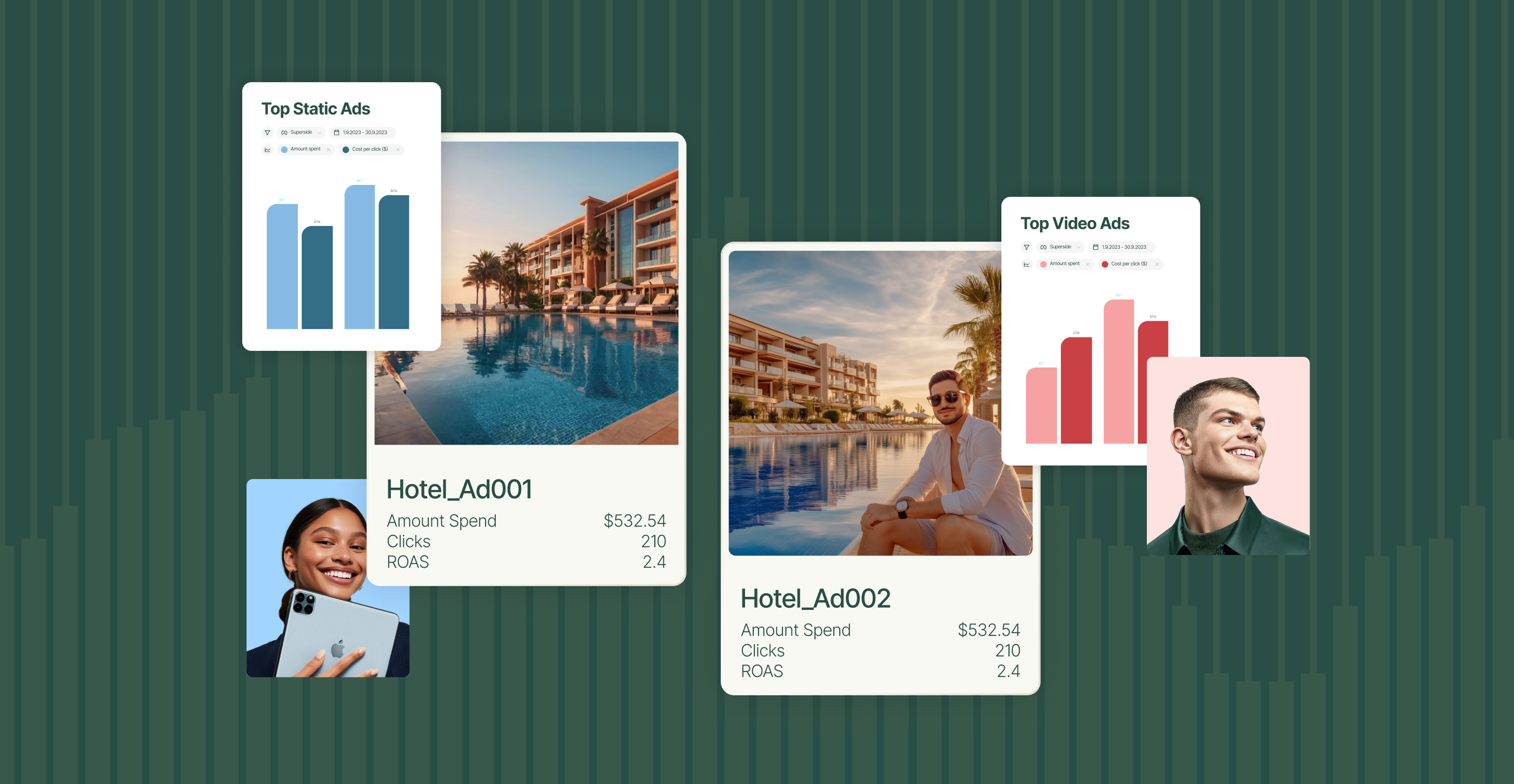
MagicBrief shut down on July 31, 2026, and you can no longer log in. Your ad data is fine, though. MagicBrief never stored it, so your campaigns, spend and creative results are still sitting in your ad platforms. What you lost is the reporting layer, not the data. If that reporting was your reason for using MagicBrief, Superads does the same job: customizable boards, a conversational AI assistant, automatic AI tagging and multi-account reporting, with pricing published on the site and no minimum commitment.
If you're reading this, you probably logged in to MagicBrief and found the door closed, or you heard it was shutting down and you're working out where to go next.
The short version: MagicBrief shut down on July 31, 2026. You can't sign up or log in anymore. This guide covers what that means for your data, what to look for in a replacement, and why Superads is the most direct landing spot if creative analytics was the job MagicBrief did for you.
What happened to MagicBrief
MagicBrief closed on July 31, 2026. After that date the app went offline, and the accounts, boards and saved reports inside it went with it.
If MagicBrief was part of your weekly reporting, losing it mid-stride is annoying. What didn't go away matters more, though.
Your ad data is safe
MagicBrief connected to your ad accounts. It didn't store the data behind them. Your campaign performance, spend history and creative results all still live where they always did: Meta Ads Manager, TikTok Ads Manager, LinkedIn, Google Ads.
So nothing about your actual advertising data disappeared when MagicBrief went offline. You're not recovering anything. You're reconnecting the same ad accounts to a different analytics tool, and that takes minutes.
What to look for in a MagicBrief replacement
MagicBrief did a few different jobs at once: ad inspiration, creative briefing, competitor research and performance analytics. Most teams leaned on one or two of those more than the rest.
Work out which job you actually need to replace. If your team used MagicBrief mainly for briefing, storyboards and its ad inspiration library, you'll want a dedicated creative tool for that side. If you opened MagicBrief to see how your live ads were doing and why, which creatives were working and where budget was leaking, that's creative analytics, and it's what Superads is built for.
The rest of this guide sticks to that job.
Superads vs. MagicBrief at a glance
Here's how the two lined up on the analytics side, with MagicBrief now discontinued.
| Superads | MagicBrief | |
|---|---|---|
| Availability | ✅ Live, sign up anytime | ❌ Shut down July 31, 2026 |
| Primary focus | ✅ Fully customizable boards | Visual reports with AI insights |
| Channel support | Meta, TikTok, LinkedIn, Google | Meta, TikTok, YouTube, LinkedIn |
| AI assistant | ✅ Superads AI | ❌ Not available |
| Ad inspiration library | ✅ Available | ✅ Available |
| Boards | ✅ Interactive, live, shareable | ❌ Reports only |
| Cross-channel reporting | ✅ All platforms | ❌ Not available |
| Multi-account reporting | ✅ On every plan | ❌ Not supported the same way |
| Starting price | $150/month (scales with ad spend) | $249/month (ad spend-based) |
| Minimum commitment | None; cancel anytime | 3-month initial commitment |
What you get with Superads
Superads is a creative analytics platform for seeing how your running ads perform and why. The parts former MagicBrief users tend to care about:
- Superads tags your creatives automatically, so you don't have to. It reads hooks, angles, CTAs, formats and visual styles off your live ads without naming conventions or manual work, and you get element-level insight from day one.
- Superads AI answers questions about your data. Ask which hooks drove the lowest CPA this month, or which ads are starting to fatigue, and it works through your actual numbers instead of handing back a generic summary.
- You build your own boards instead of filling in fixed templates. Group reports across campaigns, formats, channels and accounts, as many boards as you want.
- Multi-account reporting sits on every plan. Pull several ad accounts into one report or board and compare brands, clients or regions side by side. Agencies tend to care about this one most.
- Shared boards stay live. Anyone you share with gets a filterable, auto-updating view, and users are unlimited, so there's no per-seat bill.
- It covers Google Ads too. Meta, TikTok and LinkedIn sit alongside Google Ads (in beta, including Performance Max), so social and search land in the same report.
Pricing
Superads Pro starts at $150/month. That covers unlimited reports and boards, 12 months of data, Superads AI, AI tagging, multi-account reporting, a custom attribution window, CSV export and scheduled reports. It scales with ad spend, there are no contracts, and you can cancel anytime.
Pricing is published on the site, so there's no minimum commitment and no sales call to get a number. There's a 14-day free trial too (it does ask for a card), and no permanent free tier.
How to move from MagicBrief to Superads
- Start a Superads trial and connect the same ad accounts you had on MagicBrief.
- Rebuild your main views as boards. Most teams recreate their core reports in a few minutes, and AI tagging fills in the creative detail on its own.
- Invite your team. Users are unlimited on every plan, so there's no seat math to do.
Superads also has free migration support if you'd rather have help connecting accounts and setting up boards. Already coming from MagicBrief? Request a free migration and someone will help you get set up.
Losing MagicBrief is a hassle, but it doesn't have to slow you down. Your data never left your ad platforms, and moving your creative analytics to Superads is a matter of minutes.
The best way to judge it is to try Superads on the 14-day free trial. No sales call.
FAQs

Improve your ad campaigns
With the only AI-powered creative insights tool
built for modern marketers.
Improve your ad campaigns
With the only AI-powered creative insights tool
built for modern marketers.