Creative diversity in ads has replaced audience targeting as the main driver of paid social performance. With Meta’s Andromeda update prioritizing creative variety, relying on a few similar ads leads to rising CPMs and declining results. The solution isn’t more ads, but meaningfully different ones across concepts, formats and personas. This article explains what creative diversity really means, why it matters now, and how Superads helps you measure and improve it with AI-powered creative analytics.
There's a shift happening in paid advertising that's impossible to ignore.
For years, performance marketers lived and died by their targeting. Custom audiences, lookalikes, interest stacking—these were the levers that made or broke campaigns. But that playbook has fundamentally changed. Platform algorithms now handle most of the heavy lifting when it comes to who sees your ads. What they can't do is create compelling content for those audiences.
That's where creative diversity in ads enters the picture.
Creative diversity refers to the strategic use of varied ad formats, visual styles, messaging angles, hooks and calls to action within your campaigns. It's not about making fifty versions of the same product shot with slightly different headlines, but to produce genuinely distinct creative concepts that resonate with different audience segments, at different stages of the buying journey, through different emotional triggers.
According to data shared by Meta's data science team at the 2023 Performance Marketing Summit, creative is the single most impactful element in any campaign—with 56% of all auction outcomes attributable to creative quality. That's more than bid strategy, audience targeting and placements combined.
And the cost of not diversifying is steep: Meta's own research on creative fatigue found that after just four repeated exposures, the likelihood of conversion drops by about 45%. Separately, summit data showed click-through rates falling by 40% and conversion rates declining by as much as 60% at similar frequency levels. The exact impact varies by audience, placement, and time window—but the direction is clear: repetition kills performance
That means if you're not diversifying your creatives, your campaigns will work against you even if your product, offer and targeting are solid. The marketers who are winning right now aren't the ones with the biggest budgets. They're the ones with the most diverse, data-informed creative libraries. Building one from scratch is where many lean teams bring in help, whether that's a specialist hire or an AI marketing agency.
What counts as "genuinely different" creative?
This is the most misunderstood part of creative diversity. Many advertisers think that swapping a headline, changing a background color or A/B testing two slightly different CTAs counts as diversification.
Under Andromeda and similar algorithms, it doesn't. Meta's visual recognition models can now identify when images with different text overlays are essentially the same creative. And when the system detects low diversity, it responds by raising your CPMs.
Genuinely diverse creative differs across one or more of these dimensions:
- Concept and angle. Each ad should address a different motivation, pain point or aspiration. One ad might lead with a problem-solution narrative, another with social proof, another with aspirational lifestyle imagery and another with a direct product demo. Think of each concept as speaking to a different version of your buyer at a different moment in their decision journey.
- Format. Mix static images, short-form video, long-form video, carousels, UGC-style content and collections. Different formats appeal to different users and platform algorithms treat them as distinct creative signals. The data backs this up: Meta reports that carousel ads can achieve 30-50% lower cost-per-click compared to static single-image ads, while video ads lead all formats in CTR at around 0.98% with carousel ads close behind at 0.90% but with lower customer acquisition cost and higher ROAS. A strong creative library includes multiple format types, not just your best-performing one at different lengths.
- Visual style. Alternate between polished studio-quality production and lo-fi authentic content. The performance gap here is real. UGC-style ads see 4x higher engagement than polished brand content and after analyzing data from 400+ DTC brands in 2024 and 2025, authentic UGC ads consistently outperformed polished professional content by 3-5x across conversion rates, CPM and ROAS. That said, it's worth testing both simultaneously since a conventional polished ad can sometimes outperform UGC depending on context and product category. Before-and-after imagery, lifestyle shots, flat lays, stop-motion, talking-head testimonials: each visual approach reaches a distinct audience segment.
- Messaging and copy. Don't just tweak words. Change the entire narrative approach. Adjust tone from educational to emotional to humorous across your creative set. Each messaging angle speaks to a different buying trigger and when one angle fatigues, the others keep working.
- Hook strategy. For video content especially, the first three seconds determine everything. 73% of ecommerce video ads fail within the first three seconds because they look like ads and on Facebook's News Feed, users spend an average of 1.7 seconds viewing a piece of content on mobile. Meta has confirmed that videos sharing similar opening sequences are treated as nearly identical even when the rest of the content differs. Diversify your hooks since each hook attracts a different user. A practical tip: keep everything else in the ad identical and only swap the hook so you can isolate what actually stops the scroll. You can read more about hook testing frameworks here.
- Audience persona alignment. Create ads that speak to different customer personas. A SaaS product might have ads targeting the end user (ease of use), the decision maker (ROI and efficiency) and the team lead (collaboration features). A DTC brand might speak to the first-time buyer, the repeat customer and the gift-giver. 76% of Gen Z are open to brand messages delivered through creators and 71% of consumers say they've made a purchase shortly after seeing relevant creator content on Meta apps, which shows just how much persona alignment matters when deciding not just what to say but who says it.
How many creatives do you actually need?

There's no magic number, and the honest answer is: it depends on your budget.
Meta removed its longstanding recommendation of no more than six ads per ad set in early 2025. Many performance marketers have since experimented with ten, twenty, or even fifty ads per ad set. But more isn't automatically better, and several leading voices have pushed back on the "just add more ads" narrative.
The key principle is: more creatives only help if they represent real diversity and they are high-quality (and your budget can support meaningful learning for each one). Loading thirty variations of the same concept into an ad set won't improve performance. In fact, it can confuse the algorithm and fragment your budget.
One practical framework is to think of your creative library as a portfolio. For smaller budgets, focus on a few genuinely distinct concepts with built-in variety through Meta's creative enhancement tools. For larger budgets, you can expand to fifteen or more distinct concepts.
In all cases, maintain a mix of proven winners (scaled creatives that maintain performance), active tests (new concepts being evaluated) and experimental swings (bold approaches that might break through). This portfolio approach ensures you're always feeding the algorithm fresh, diverse inputs while maintaining performance stability.
Meta's Andromeda Update: The algorithm that prioritizes creative diversity

Andromeda replaced the legacy delivery system between late 2024 and early 2025, and it fundamentally changed how ads get served to users. Instead of working from audience-level assumptions ("show this ad to women aged 25–34 who like yoga"), Andromeda operates at the individual level.
It predicts which specific ad each person is most likely to respond to, based on real-time intent signals, creative quality and engagement patterns.
In practical terms, Andromeda filters millions of candidate ads down to a few thousand eligible ones for each impression, and it prioritizes creative differentiation as a core ranking signal.
Andromeda rewards diversity
The old Meta system could get away with a handful of similar ads because delivery was largely controlled by targeting inputs. Andromeda flips that model. Since the algorithm now decides who sees what, it needs variety to work with. If all your ads say essentially the same thing with similar visuals, Andromeda treats them as a single creative—and your ability to reach different audience segments collapses.
According to Meta's Andromeda engineering blog, advertisers who turned on Advantage+ Creative's AI-driven features—which combine automated targeting with creative generation—experienced a 22% increase in ROAS. Meta also estimates that businesses using its image generation tools are seeing a +7% increase in conversions.
Meta is also rolling out three new creative-level metrics in Ads Manager: Creative Fatigue (which flags when an audience has seen a specific ad too many times), Creative Similarity (which detects when your ads are too visually alike), and Top Creative Themes (which shows which angles are actually resonating).
These metrics are still being tested across accounts globally, but they signal a clear direction: Meta wants advertisers to see and act on creative diversity as a measurable performance dimension. And the underlying algorithm behavior is already in play—accounts with high creative similarity are seeing higher CPMs as Andromeda treats similar-looking ads as effectively the same creative.
As Meta itself stated: "The focus has shifted from niche targeting to creative diversification as the best lever to find the most relevant audiences."
What this means for advertisers
The strategic implications are clear. Creative testing is now the central lever of performance improvement. Broad targeting with diverse creatives now consistently outperforms tightly segmented audiences with repetitive ads. And refreshing your creative library has become the norm for any campaign that wants to be evergreen and successful.
This shift isn't limited to Meta, either. Google's Performance Max and TikTok's delivery algorithms follow similar principles, rewarding creative variety and penalizing repetition.
How to build creative diversity in your ad campaigns: 5 key steps
Understanding why creative diversity in ads matters is one thing. Actually building a diverse creative strategy that drives results? That's where most teams struggle.
This section is your practical playbook for developing, measuring, and scaling creative diversity across your paid social campaigns.
Moving to a systematic diversity engine requires process changes.
Step 1: Audit your current creative library
Before producing anything new, analyze what you already have. How many distinct concepts are active? How many formats are represented? Which audience personas are addressed and which are missing? This audit reveals your diversity gaps and sets priorities for new production.
The fastest way to do this is by connecting your ad accounts to Superads. Once connected, you can use the Group By options to instantly categorize your active creatives by format, messaging angle, visual style and concept without manually pulling exports or building spreadsheets.
Or you can simply ask Superads AI directly: "Which creative themes are most represented in my account?" and get an answer in seconds.

If you're doing this manually, start by pulling every active ad across your accounts and categorizing them along the key diversity dimensions: concept (what's the core idea?), format (static, video, carousel, etc.), messaging angle (problem-solution, testimonial, feature-led, aspirational), visual style (UGC, studio, graphic, lifestyle) and target persona.
Be honest about what counts as "distinct."
Meta's systems can identify ads that look different on the surface but share the same underlying concept. Two product shots with different text overlays aren't two concepts; they're one concept with a minor variation.
Once categorized look for clusters and gaps. Most teams find that 70-80% of their active creatives cluster around one or two concepts and a single format. That concentration is your biggest opportunity. The personas or angles with zero representation? Those are your highest-priority production targets.
Step 2: Map your creative matrix
Create a simple grid with your audience personas on one axis and your creative angles on the other. Each cell represents a unique creative opportunity. This matrix ensures you're covering the full spectrum of diversity, not just repeating your strongest angle across every persona.
For example, if you're a SaaS company, your personas might include decision-makers (focused on ROI and scale), end users (focused on ease of use and daily workflow), and technical evaluators (focused on integrations and security). Your creative angles might span problem-solution, social proof, product demo, thought leadership, and competitive comparison. That's a 5×3 grid with fifteen distinct creative opportunities—each one a genuinely different combination of who you're speaking to and what you're saying.
Not every cell needs to be filled immediately. Prioritize based on your audit: which persona-angle combinations have zero coverage? Which ones represent your highest-value audience segments? The matrix isn't a mandate to produce fifteen ads tomorrow—it's a strategic map that ensures your next production sprint fills real gaps instead of reinforcing existing biases.
Step 3: Produce in batches with intent
Instead of creating one ad at a time, produce creative in themed batches that systematically fill your matrix. A single shoot or design sprint can yield multiple distinct concepts if planned with diversity in mind.
Batch production also helps with efficiency. Shooting three distinct video concepts in one session is far cheaper than three separate productions. Similarly, a single design sprint can produce static ads, carousel sequences, and motion graphics across multiple messaging angles if the creative brief maps back to your matrix.
Step 4: Launch and measure

Deploy new creatives with enough budget and time to generate meaningful data. The right threshold depends on your objective and spend level: Meta's own learning system stabilizes with roughly 50 optimization events over seven days at the ad set level, while directional creative reads typically need at least a few thousand impressions per variant.
The key is giving each creative a fair chance to generate signal before making decisions—don't kill a new ad after 200 impressions. Track performance at the concept level, not just the individual ad level.
Structure your ad sets so that new creatives get isolated learning time before being thrown into competition with proven winners. Some teams use dedicated testing campaigns with equal budget distribution; others use Meta's Advantage+ creative features to let the algorithm allocate spend but monitor per-creative delivery to ensure nothing gets starved before it has a chance to prove itself.
Whatever your approach, resist the urge to make snap judgments. Creative that looks like a loser in the first 48 hours sometimes needs a broader audience sample or a different time window to find its stride. Set clear evaluation criteria in advance—minimum delivery thresholds, evaluation windows, and the specific metrics you'll use to judge success—so decisions are systematic, not reactive.
Step 5: Analyze and iterate
This is where most teams fail. They produce diverse creative, launch it, and then… don't analyze what's actually working. Which concepts resonated? Which formats outperformed? Which hooks drove the highest engagement?
The analysis should happen at two levels. First, at the individual creative level: which specific ads are winning and losing, and why? Look beyond surface metrics like CTR to understand the full funnel—an ad with a lower click-through rate might drive significantly better conversion rates or higher average order values downstream. Second, and more importantly, at the pattern level: across all your ads, which dimensions of diversity correlate with performance? Are video formats consistently outperforming static across every audience? Is a specific messaging angle driving results regardless of the visual style?
These pattern-level insights are what make creative diversity compounding rather than random. They inform your next production cycle: double down on the dimensions that are working, retire the ones that aren't, and test new variations of your winners
Without this analysis loop, creative diversity becomes creative chaos.
The data problem: Why creative diversity without analytics is just guessing
And this is the hardest truth about creative diversity in ads: without robust analytics, you're operating blind.
You can produce the most beautifully diverse creative library out there, but if you can't measure which dimensions of diversity are actually driving performance, you're just spending more on production without guaranteeing better results. You need to know not just which ads perform best, but why they perform—and what patterns connect your winners.
Are your top performers clustered around a specific creative dimension, suggesting you need more depth there? Or are they spread evenly, suggesting the algorithm rewards your breadth?
These questions can't be answered by native platform dashboards alone. Meta Ads Manager will tell you which individual ads have the best CPA, but it won't reveal that your problem-solution videos consistently outperform your testimonial carousels across every audience segment. It won't show you that your UGC-style hooks drive 3x the engagement of your studio-produced intros or it won't connect patterns across socials to reveal which creative strategies work cross-platform.
This analytical gap is exactly what holds most teams back from achieving true creative diversity at scale. They know they need to diversify, but they don't have the insights to diversify intelligently.
How Superads helps you build and measure creative diversity in ads

This is where Superads comes in. Superads was built specifically for this moment in paid advertising, where creative thrives but data is still a mess.
See all your creatives in one place, across every channel
The first challenge of creative diversity is simply seeing what you have. Most marketers are juggling separate dashboards for Meta, TikTok, LinkedIn and Google, exporting spreadsheets and manually piecing together a picture of their creative performance. Superads eliminates that pain by centralizing your ad creatives and performance data from all four platforms into one intuitive dashboard. If you want to understand how to measure ad effectiveness across channels without drowning in exports, this is where you start.
AI-powered creative breakdowns that reveal what drives performance
Instead of just showing you which ads have the best metrics, Superads analyzes the actual content of your ads and breaks them down into meaningful dimensions: hooks, messaging angles, emotional triggers, visual formats, CTAs and more. No naming conventions required. No manual tagging.
This means you can surface insights like which messaging angle is driving the lowest CPA or whether UGC video formats outperform studio content on one platform but underperform on another. These are the kinds of patterns that turn creative diversity from a vague best practice into a precise data-driven strategy. You can read more about how AI-powered creative breakdowns work in practice and why they've become essential for modern creative strategists.
Multi-account and cross-channel analysis
For agencies and brands running ads across multiple accounts or platforms, Superads offers multi-account and cross-channel analysis in a single report. Build dashboards that combine data from different ad accounts and platforms to get a true holistic view of your creative performance.
This is critical for creative diversity because what works on Meta might not work on TikTok and you need visibility into those differences to allocate your creative budget effectively. If you're evaluating your options, see how Superads stacks up against other creative analytics tools on the market.
Reports and dashboards your whole team will actually use
Creative diversity is a team sport. Designers need to know which visual styles are winning. Copywriters need to know which messaging angles resonate. Media buyers need to know which formats drive the best ROI. Creative strategists need the big picture.
Superads makes this collaboration seamless with interactive shareable dashboards that update automatically, so everyone from ad buyers to designers is working from the same data. And when it's time to run experiments, Superads turns scattered test results into actionable creative intelligence. You can learn more about how to get the most out of ad testing with the right analytics layer behind it.
Not sure where creative analytics fits into your broader stack? The Superads about page breaks down how the platform was built and what problem it was designed to solve.
Start free, scale when ready
Superads offers a top free plan that includes unlimited ad accounts, unlimited team members, AI Copilot for chatting with your data and Superads Scores. You can connect your ad accounts and start analyzing your creative diversity right now, without a credit card.
When you're ready to go deeper, Professional plan starts at just $49/month, unlocking unlimited reports, 365 days of data, AI creative breakdowns, multi-account analysis, date comparisons and more. There's a 14-day free trial, no contracts and no sales calls.
Creative diversity in ads is your competitive edge
The era of winning paid social campaigns through targeting precision alone is over. Meta's Andromeda update, Google's Performance Max and TikTok's delivery algorithms have made creative diversity in ads the single most important factor in campaign performance.
But creative diversity without data is just creative volume. Producing more ads doesn't help if you can't identify which dimensions of diversity are driving results—and which are wasting your budget. The brands that win in 2026 and beyond are the ones that combine diverse creative production with rigorous, AI-powered creative analytics.
That's the gap Superads was designed to fill. Centralized reporting across Meta, Google, TikTok and LinkedIn. AI-powered breakdowns that reveal why your winners win. Multi-channel analysis that shows where to double down. And pricing that makes it accessible to every marketer, not just those with enterprise budgets.
Creative is the new targeting. Data is how you do it right.
FAQs

Improve your ad campaigns
With the only AI-powered creative insights tool
built for modern marketers.
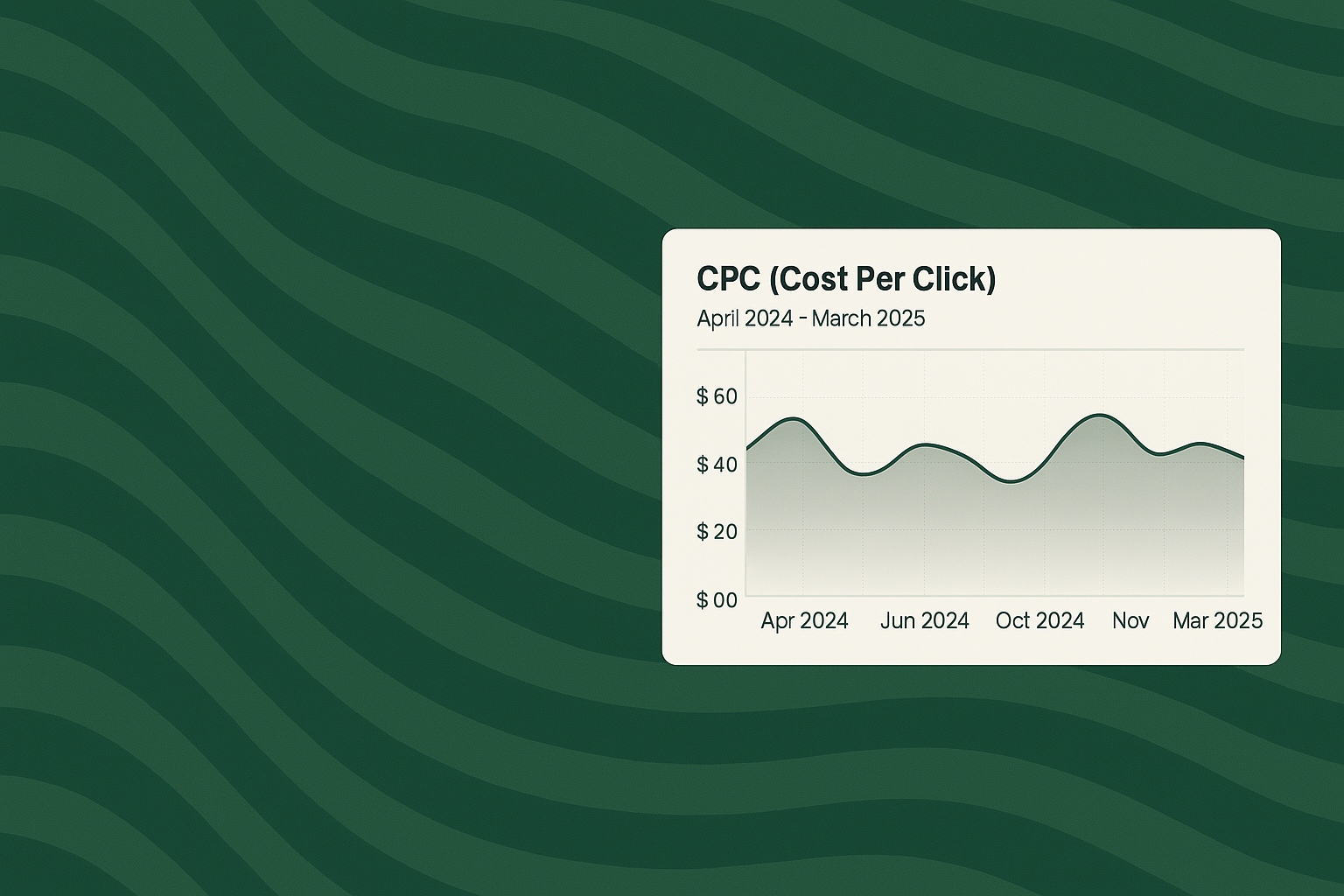
Facebook Benchmarks
Check out fresh CPC, CPM, CTR
Facebook Ads data.
Filter by industry, country or
campaign type.
Improve your clients' ROI
Track multiple accounts in just one place.
Tailored for your agency's needs. Optimize with AI.
Improve your clients' ROI
Track multiple accounts in just one place.
Tailored for your agency's needs. Optimize with AI.