Emanuel is a Content Specialist. With the knowledge that three languages (and counting) and digital marketing can serve a creator, he has helped B2Bs from multiple industries to write, optimize and scale their content game with compelling pieces that answer questions and solve problems.
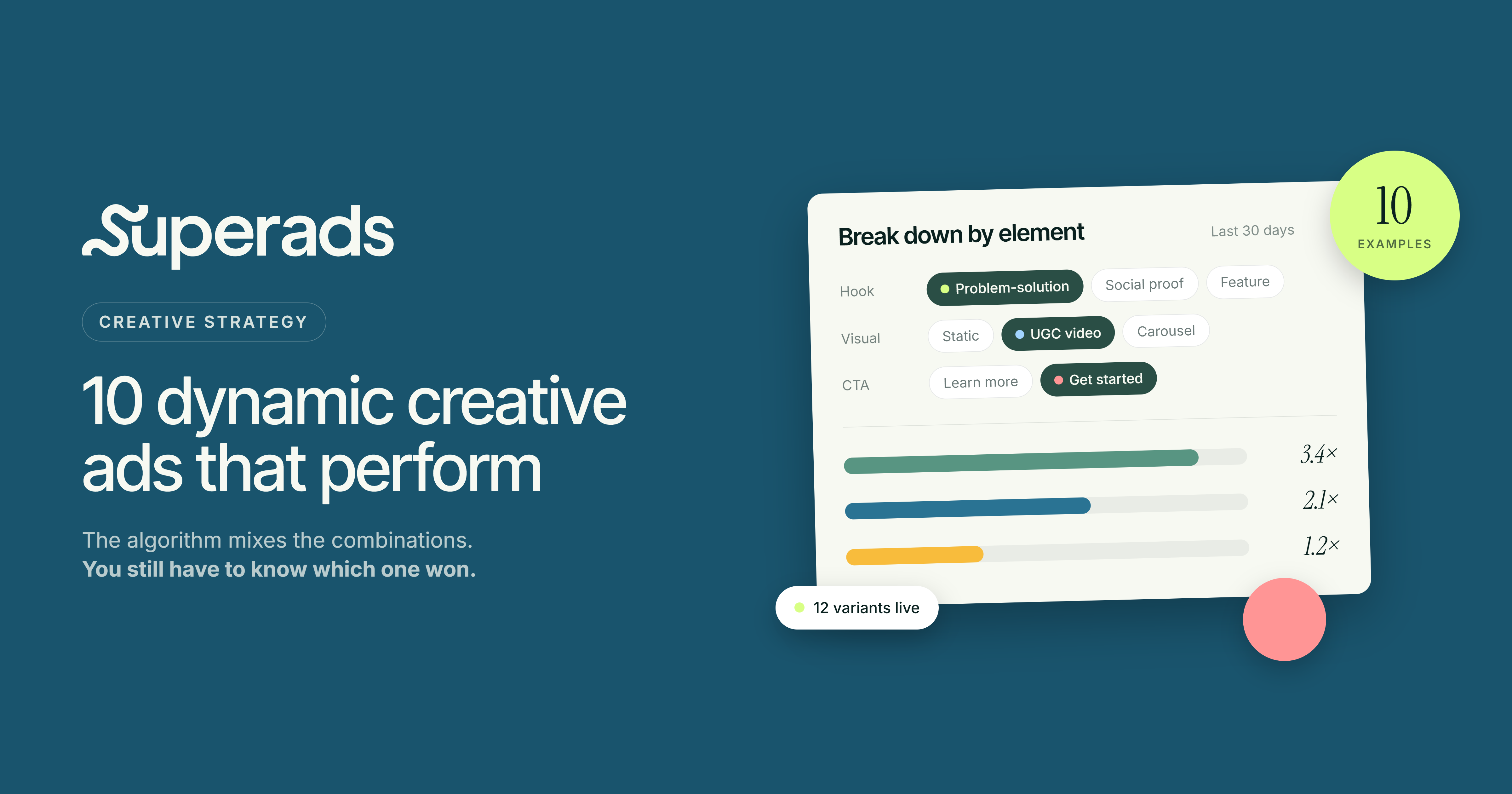
Dynamic creative optimization is one of those terms that sounds more technical than it is. At its core, it just means letting the ad platform assemble your creative on the fly — pulling from a library of hooks, images, videos, headlines and CTAs you provide, and serving whichever combination looks most likely to convert for the person seeing it.
Meta's Advantage+ Creative and TikTok's Automated Creative Optimization both work on this principle. When paired with a real creative library and a well-defined audience, dynamic creative can outperform manual A/B testing at element level — finding better-performing combinations faster than any human-managed test.
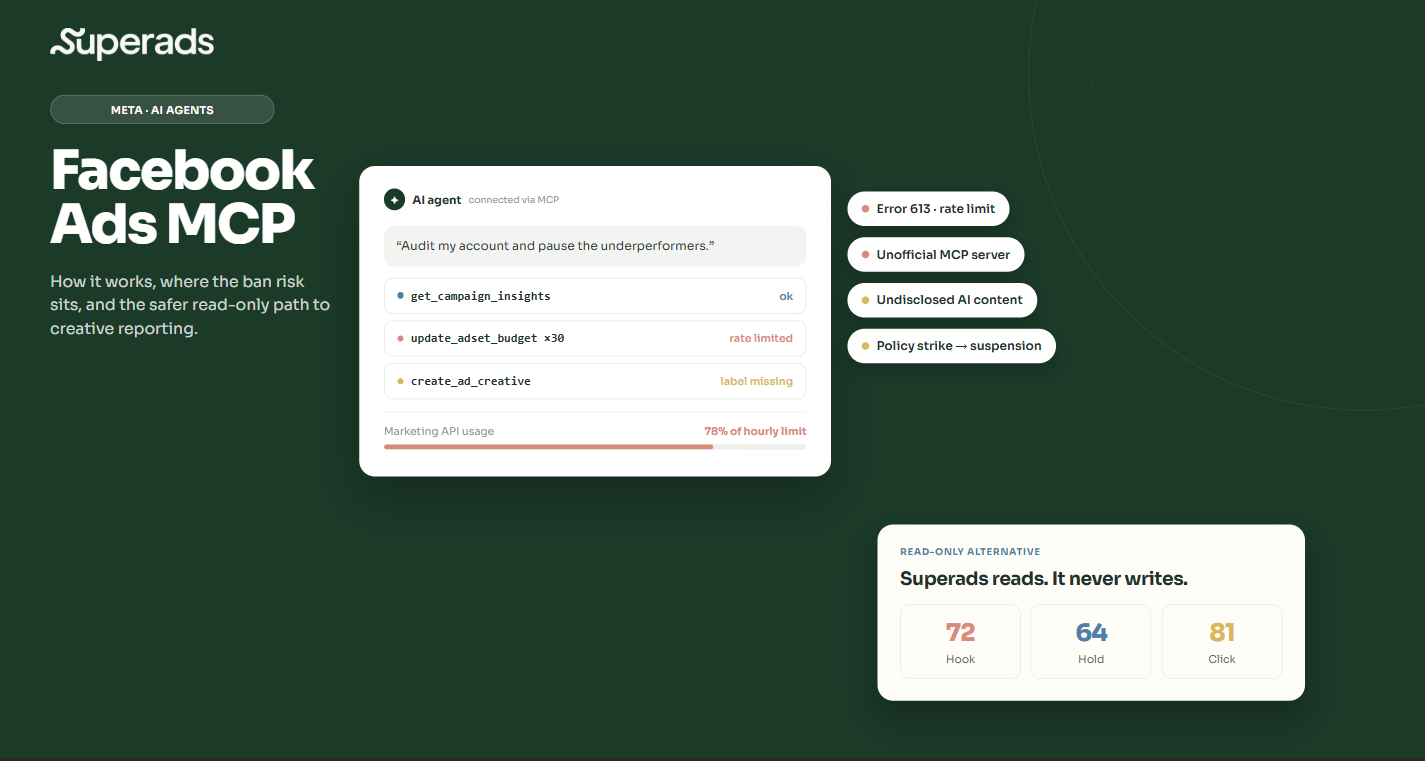
In April 2026, Meta officially opened the door to AI agents. With the launch of the Meta Ads AI Connectors, any Claude, ChatGPT or Cursor user can now connect to their Facebook and Instagram ad accounts through the Model Context Protocol and start querying campaigns, moving budgets and spinning up new creatives in a conversation. For the first time, "ask an AI to run my Meta ads" is not a workaround. It is a supported workflow.
The reason marketers are paying attention is obvious. Paid social has become impossible to manage manually. Meta's Andromeda algorithm is making delivery decisions at a speed no human buyer can match, creative volume is the new performance lever, and reporting requests from stakeholders arrive faster than analysts can pull them. An AI that can read your ad account and write to it looks, at first glance, like the answer to every one of those problems.
The shift from media-led to creative-led performance marketing is no longer a prediction. With targeting decimated by privacy changes and platforms like Meta pushing broad targeting by default, the creative itself is now doing most of the work the algorithm used to do for you. Nielsen's 2023 analysis of nearly 450 CPG campaigns put creative at 49% of sales lift.
That has changed the tooling stack. Native ad platforms tell you what's happening at the campaign level. Spreadsheets, until recently, were the only way to roll that up to the creative level, and they break the moment you're running across multiple accounts or platforms.
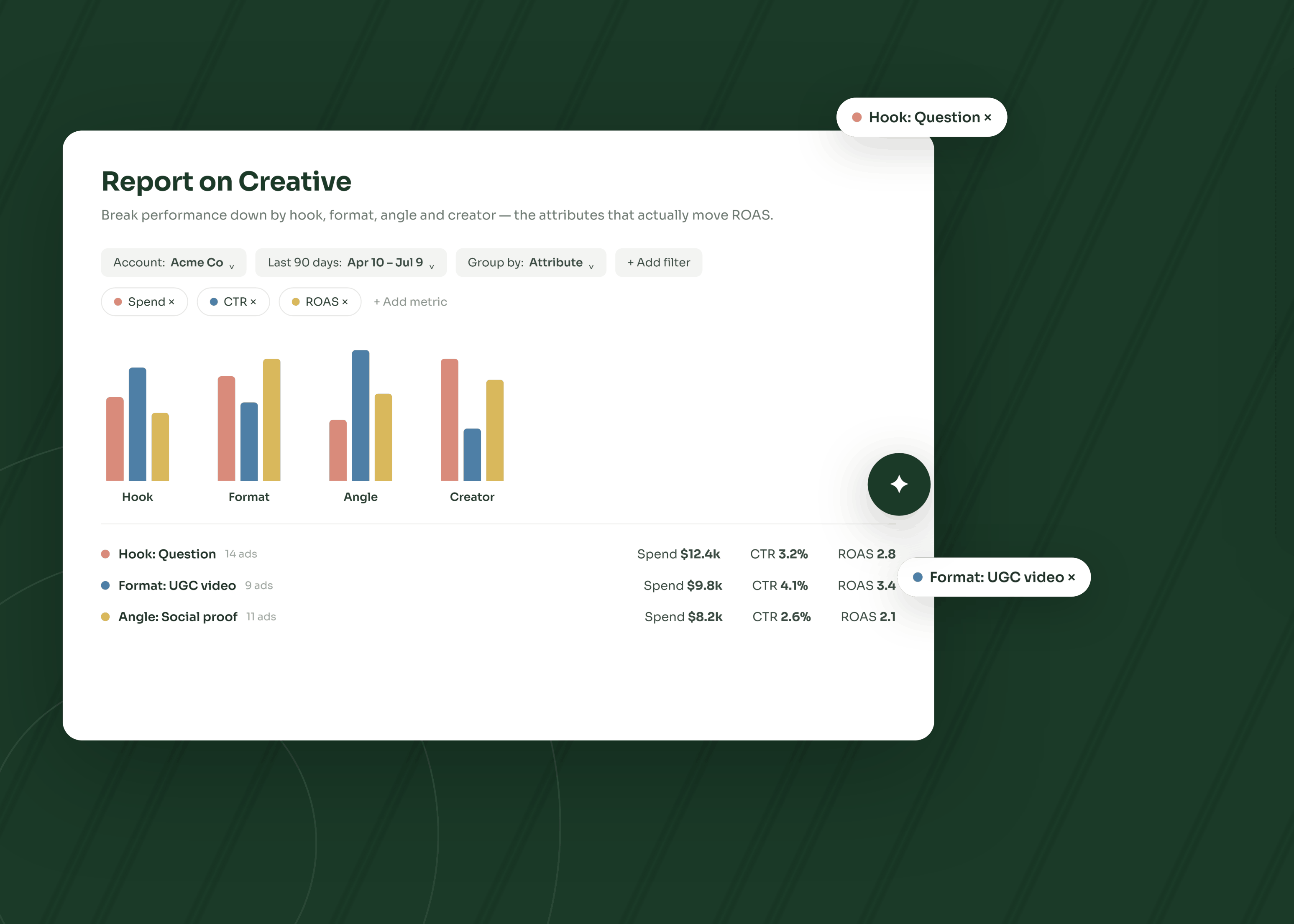
Creative performance is a measure of how effectively a specific ad asset drives a desired outcome, judged against the creative variables you can control: the hook, the format, the messaging angle, the visual style, the creator, the offer and so on.
It's distinct from campaign performance and media performance. A campaign-level ROAS tells you whether a budget is working. A creative performance read tells you why.
AI ad optimization has been sold to performance marketers for years as an automated, low-effort thing: connect your account, let the algorithm do the work, watch results improve. Some teams do it this way today. Some searched for more solutions than just that. Most landed somewhere in the middle of believing native social media analytics tools and trying others on the side.
But today, AI has become the operating system of paid advertising. Meta's Andromeda algorithm, Google's Performance Max, TikTok's Smart Performance Campaigns… These systems are making targeting, bidding and delivery decisions at a speed and scale no human team can match.
You set up the A/B test. You ran two creatives. One won. You scaled the winner. And somehow, performance still plateaued. Or worse, dropped.
You ask: Why is testing not working?
If you're reading this, you probably logged in to MagicBrief and found the door closed, or you heard it was shutting down and you're working out where to go next.
The short version: MagicBrief shut down on July 31, 2026. You can't sign up or log in anymore. This guide covers what that means for your data, what to look for in a replacement, and why Superads is the most direct landing spot if creative analytics was the job MagicBrief did for you.
When you're evaluating creative tools, the most important question isn't "which one has more features," it's which problem are you actually trying to solve?
Foreplay and Superads both serve performance marketers and creative teams. But they built their products from opposite ends of the workflow, and that difference shows up in meaningful ways depending on what your team needs most.
If you're evaluating creative analytics tools, you've almost certainly come across both Superads and Motion. They occupy similar categories, since they help performance marketers and creative teams understand which ads are working, why they're working and what to build next.
But the two platforms are built on different philosophies, and the differences show up in ways that matter for day-to-day work, especially at scale.